Health and Safety Policy for Paddington Cleaner
 Paddington Cleaner is committed to maintaining a safe, healthy, and well-managed working environment for staff, customers, and visitors. This health and safety policy sets out the principles and practical standards we follow to reduce risk, prevent accidents, and support responsible cleaning practices. Our approach is based on common sense, training, supervision, and the careful use of equipment and materials.
We recognise that cleaning work can involve physical effort, exposure to chemicals, slips and trips, and the handling of items in occupied properties. For that reason, Paddington cleaning services are designed to be carried out with safety as a priority at every stage. All team members are expected to follow safe systems of work, report hazards promptly, and act with care in every setting.
Our policy applies to all cleaning activities carried out under the Paddington Cleaner name, including domestic, commercial, and specialist tasks. It also applies to temporary workers, supervisors, and any subcontracted personnel working on our behalf. Everyone involved is responsible for helping to maintain a safe workplace and for supporting a culture where health and safety is taken seriously.
Health and Safety Responsibilities
Management holds overall responsibility for making sure that suitable arrangements are in place for safe working. This includes identifying hazards, assessing risk, providing appropriate training, and ensuring equipment is maintained in good condition. Supervisors are expected to monitor daily work, check that procedures are followed, and respond quickly when a concern is raised.
Employees must take reasonable care of their own safety and the safety of others. They should use equipment correctly, wear any required protective items, and never continue working if they believe a task has become unsafe. Paddington cleaners are expected to stop and report any issue that could lead to injury, contamination, or property damage.
 It is also important that all workers remain alert to changing conditions in the environment. A room may contain wet floors, loose cables, fragile items, or poor lighting, and each of these may create unnecessary risk. Safe cleaning practice means adapting to the space, not rushing through it.
Risk Assessment and Safe Systems of Work
Before work begins, a suitable risk assessment should be carried out where needed. This helps identify hazards and decide on control measures such as warning signs, restricted access, protective gloves, or modified cleaning methods. Risk assessments should be reviewed whenever conditions change or when new equipment, products, or procedures are introduced.
Our Paddington cleaning policy encourages a consistent routine for planning work safely. This includes checking the area before starting, confirming that electrical equipment is suitable, and ensuring that cleaning products are used in line with instructions. Where tasks involve lifting, reaching, or repetitive movement, staff should use proper technique and take reasonable breaks to avoid strain.
Wet floors, ladders, moving furniture, and exposure to cleaning agents are among the most common risks in the cleaning sector. These hazards should be controlled through preparation, clear communication, and suitable equipment. When a task cannot be completed safely, it must be delayed or adjusted rather than forced.
Training, Equipment, and Personal Protection
Training is essential to safe and effective cleaning. All staff should receive instruction on safe manual handling, chemical awareness, equipment use, hygiene standards, and emergency procedures. Additional training may be provided for specialist tasks so that workers understand the correct methods and limitations of the equipment they use.
Where necessary, personal protective equipment will be supplied and must be worn correctly. This may include gloves, masks, eye protection, or non-slip footwear depending on the task involved. Paddington Cleaner expects all PPE to be used responsibly, kept clean, and reported if damaged or unsuitable.
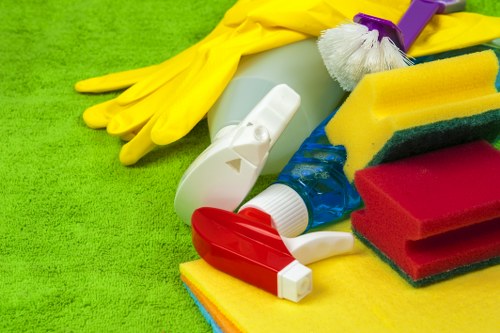 Cleaning tools and machines should be checked before use and stored safely after use. Any defect, wear, or malfunction must be reported immediately. Equipment should never be used if it appears unsafe, and only trained individuals should operate machinery that requires specific handling.
Cleaning Products and Workplace Hygiene
Cleaning chemicals must be selected, stored, and handled with care. Containers should remain clearly labelled, and products should not be mixed unless the instructions specifically allow it. Staff should wash hands after use and avoid unnecessary contact with substances that may irritate the skin, eyes, or respiratory system.
Good hygiene is a central part of the Paddington cleaning service. Workers should keep tools clean, separate contaminated materials from clean supplies, and dispose of waste in a safe and responsible way. Any spill, stain, or contamination incident should be managed promptly to reduce the chance of slips, exposure, or spread of germs.
Emergency Response and Incident Reporting
 If an accident, near miss, fire risk, or unsafe condition occurs, the situation should be reported immediately through the proper internal process. Quick reporting allows corrective action to be taken before further harm occurs. First aid and emergency response arrangements should be suitable for the type of work being performed and the environment in which it takes place.
Monitoring, Review, and Continuous Improvement
Health and safety performance will be monitored regularly to make sure this policy remains effective. Reviews may consider incident reports, staff training, equipment condition, and any changes in the type of cleaning work undertaken. Where improvements are identified, action should be taken without delay.
We believe that safe practice should be consistent, practical, and easy to follow. A well-run Paddington cleaner operation depends on clear communication, responsible behaviour, and ongoing attention to detail. Every member of the team plays a part in making safety a daily habit rather than an occasional concern.
 This policy will be updated as needed to reflect changes in procedures, equipment, or working methods. By following these standards, Paddington Cleaner aims to protect people, support high-quality work, and maintain a professional service that places health and safety at the centre of everything it does.