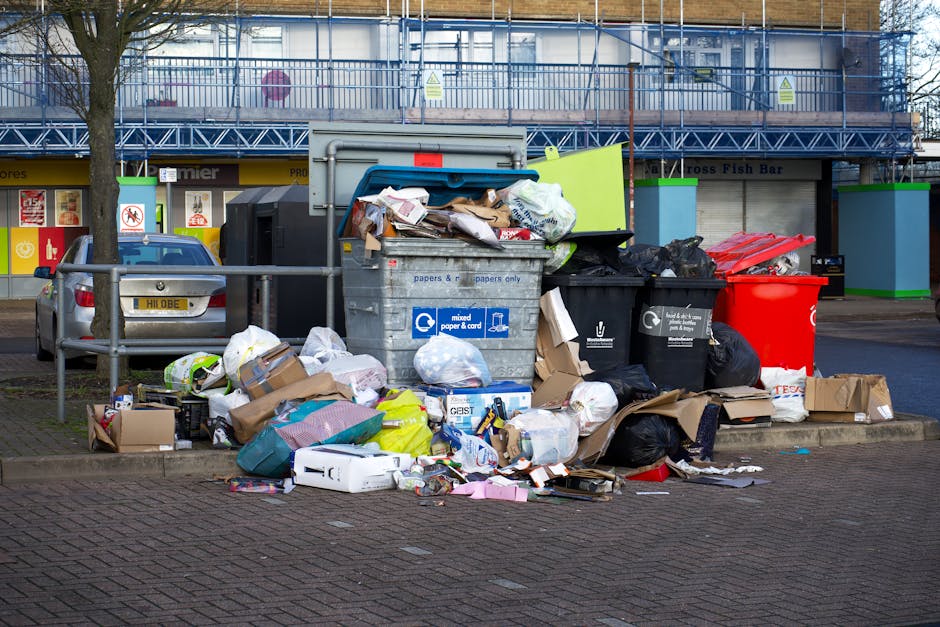
Westminster Council rules for bulk rubbish in Paddington (W2): a practical local guide
If you live, manage property, or run a business in Paddington, bulk rubbish has a habit of turning up at the worst possible moment. A sofa left by the door, a broken wardrobe after a move, or a stack of bags from a flat clear-out can quickly become a nuisance. This guide explains Westminster Council rules for bulk rubbish in Paddington (W2) in plain English, so you can avoid fly-tipping issues, keep communal areas tidy, and choose the right disposal route without making life harder than it needs to be.
Truth be told, most bulk waste problems are not caused by bad intentions. They happen because people are rushed, unsure about the rules, or dealing with an awkward item that simply will not fit into normal collections. Let's sort it out properly.
- Why the rules matter in Paddington
- How bulk rubbish disposal works
- Key benefits and practical advantages
- Who needs this guidance
- Step-by-step guidance
- Expert tips for smoother disposal
- Common mistakes to avoid
- Tools, resources and recommendations
- Law, compliance, standards and best practice
- Options and comparison table
- Case study or real-world example
- Practical checklist
- Conclusion
- Frequently asked questions
Why Westminster Council rules for bulk rubbish in Paddington (W2) Matters
Paddington is busy, tightly packed, and full of shared entrances, narrow streets, managed blocks, and high-turnover rentals. That makes bulk waste a bigger issue than people often expect. One oversized item left in the wrong place can block a pavement, inconvenience neighbours, attract complaints, and create a mess very quickly.
The rules matter for three reasons. First, they protect the public realm: pavements, front gardens, mews lanes, and bin stores all need to stay usable. Second, they protect residents from penalties and disputes. And third, they help prevent confusion in buildings where tenants, landlords, and managing agents may each assume someone else is dealing with the rubbish. Familiar story, that one.
There is also a practical side. If you understand the process early, you can plan around a move-out date, a refurbishment schedule, or a last-minute office clear-out. That is especially useful in W2, where a simple delay can spill into a weekend, inconvenience building staff, or interfere with cleaners and contractors. If you are preparing a property changeover, you may also find our guide to cleaning quotes in W2 helpful when budgeting the wider job.
Expert summary: In Paddington, bulk rubbish is not just a disposal issue; it is a neighbour, safety, and building-management issue. The smoother you plan it, the fewer problems you create later.
How Westminster Council rules for bulk rubbish in Paddington (W2) Works
Bulk rubbish, sometimes called bulky waste or large-item waste, usually refers to items that do not fit inside normal household bins or regular collection containers. Think mattresses, chairs, wardrobes, broken appliances, table tops, carpets, and similar large items. Different councils handle this differently, but the core idea is consistent: bulky items should be presented only in the way the local authority or your building arrangements allow.
In Paddington, the main point is to check whether the item is eligible for a council collection, needs a booked service, or should go through a private clearance route. Westminster-managed processes can change, and building rules may be stricter than the council's general guidance. If you are in a mansion block, estate, or rented flat, the landlord or managing agent may also have separate instructions. That part is easy to overlook, and it matters.
In real life, the process usually follows a simple logic:
- Identify the item and whether it is bulky, reusable, recyclable, electrical, or hazardous.
- Check whether a booked collection is available for your property type.
- Decide whether the item must be taken to a designated point, kept indoors until collection, or placed outside at a specific time.
- Make sure it does not obstruct access, fire exits, pavements, or shared entrances.
- Use a lawful route if the item is too large, too urgent, or too awkward for normal collection.
A key detail many people miss: "bulk rubbish" does not always mean "anything large." Some items are treated separately because of material type, safety risk, or recycling rules. A TV, for example, is not just a big object; it is often classed as electrical waste and needs careful handling. Same goes for fridges, paint, or anything with sharp edges, liquids, or contamination.
If you are doing a full clear-out, it can help to think in categories rather than just in piles. That mindset makes decisions easier and reduces the odds of leaving one awkward thing behind. For local move-related jobs, our article on same-day junk clearance in Paddington gives a useful sense of how faster clearances are typically organised.
Key Benefits and Practical Advantages
Following the right bulk rubbish process in Paddington brings a lot of small but important benefits. None of them are flashy, but they add up.
- Less risk of complaints: Neighbours are far less likely to object when waste is handled neatly and on time.
- Cleaner communal areas: Stairwells, hallways, and entrances stay usable, which is a big deal in shared buildings.
- Lower chance of fly-tipping problems: Unattended bulky rubbish can quickly become a target for dumping or scattering.
- Better move-out or handover outcomes: Landlords and agents tend to look more favourably on properties left tidy and compliant.
- Less stress: Knowing the route in advance saves you from last-minute panic on a rainy evening with an old mattress in the hallway.
There is also a money-saving angle. If you handle bulky waste properly first time, you reduce the chance of extra charges, missed appointments, or having to pay for an emergency fix. A small bit of planning beats a rushed scramble almost every time.
And for properties in Paddington's apartment blocks, there is a quiet but real advantage: good waste discipline supports the whole building. It keeps loading areas clear, helps cleaners work properly, and makes life nicer for everyone passing through. It sounds obvious, but these things are often the difference between an organised building and a place that feels permanently half-moved-in.
Who This Is For and When It Makes Sense
This guidance is useful for a wide mix of people in W2. If any of the scenarios below sound familiar, you are probably in the right place.
- Tenants moving out: You may need to clear old furniture, broken bits, or items not suitable for the new tenancy.
- Landlords and letting agents: End-of-tenancy turnovers often uncover abandoned bulky items that need prompt action.
- Homeowners: A renovation, declutter, or replacement of larger household items can create bulky waste quickly.
- Office managers: Desks, shelving, old chairs, and packaging materials need a proper disposal plan.
- Building managers: Communal spaces can become cluttered fast if residents leave bulky items informally.
- People sorting a deceased estate or family property: These jobs are often emotional as well as practical, and they need a steady, respectful process.
It also makes sense whenever the item is too large for ordinary bin services, too heavy to carry easily, or too awkward to move without help. If you are dealing with a mix of rubbish and deep-cleaning after a clearance, our end of tenancy cleaning Paddington page and domestic cleaning in Paddington information can help you think through the wider handover work.
Step-by-Step Guidance
Here is a practical way to deal with bulk rubbish in Paddington without overcomplicating it.
1. Sort the items into simple groups
Start by separating general bulky household waste, reusable furniture, electrical items, and anything potentially hazardous. This sounds a bit basic, but it saves time later. A single mixed pile turns into confusion very quickly.
2. Check your building rules first
If you live in a block, read the waste instructions from the landlord, managing agent, or concierge. Some buildings allow temporary placement in a designated service area; others do not. Do not assume that because one neighbour did it, it is automatically fine. Not quite how it works, sadly.
3. Identify whether the item can be collected or needs special handling
Large furniture often follows a different route from electrical goods or contaminated items. If something has sharp edges, liquid residue, or broken glass, make sure it is wrapped or boxed safely before anyone moves it.
4. Choose the right disposal method
You may be able to use a council collection route, arrange a private clearance, or break the load into recyclable and non-recyclable parts. The right answer depends on urgency, item type, access, and how much you need removed.
5. Prepare the item properly
Remove loose contents, fold down where possible, tape up doors or drawers if safe to do so, and clear a route through the property. In older Paddington buildings, narrow landings and turns can be more of a challenge than the item itself.
6. Place the rubbish only where allowed
Do not leave bulky items in the street, beside bins, or in front of shared exits unless the collection instructions specifically allow it. This is the point where many avoidable issues start.
7. Follow up if the item is not taken
If a collection is missed or the item was rejected because it was not prepared correctly, act fast. The longer it sits there, the more likely it is to become a problem for you and the building.
A simple example: a tenant moving out of a Praed Street flat has an old sofa, a broken side table, and a dead vacuum cleaner. The sofa may need a different disposal route from the vacuum, and the landlord may want all items gone before final inspection. Planning that separation early avoids last-day chaos. If you live nearby, our flats on Praed Street cleaning tips piece can also be useful when you are juggling a full handover.
Expert Tips for Better Results
After enough clearances, a few patterns stand out. The jobs that go smoothly are usually the ones where people think one step ahead.
- Measure doorways and stair turns before moving heavy items. It sounds fussy until a wardrobe jams in the hall.
- Take photos before and after. This is especially useful in rentals or managed buildings where proof matters.
- Separate recyclables early. Cardboard, metal, and some hard plastics are easier to deal with when they are not buried under general rubbish.
- Keep one small "hold back" area for items still under review. That prevents accidental disposal of something important.
- Schedule bulky waste before the final cleaning pass. Otherwise, you clean twice. Nobody wants that.
One practical local observation: in Paddington, access can be the real bottleneck, not the waste itself. Basement flats, top-floor conversions, and properties with tight communal halls can take longer than people expect. If you have a lot to remove, factor in carrying distance, lift access, and loading time, not just the number of items.
And if your clearance is tied to a property sale, keeping the home presentable matters too. A tidy, empty space is generally much easier to present well, which is why articles like our Paddington property sales guide can be surprisingly relevant at the same time.
Common Mistakes to Avoid
Bulk rubbish errors are usually simple, which is why they are so annoying. The good news? They are avoidable.
- Leaving items outside too early: This can create obstruction, complaints, and weather damage.
- Mixing the wrong materials together: Electrical waste, reusable items, and general rubbish should not always be treated the same way.
- Ignoring building instructions: A perfectly fine disposal method in one property may be prohibited in another.
- Forgetting about access: A large item may technically fit through a doorway but still be impossible to carry safely downstairs.
- Assuming someone else will deal with it: In shared homes or managed blocks, that assumption causes endless friction.
- Using a random private collector without checking credibility: If waste is fly-tipped later, the responsibility can come back to bite you. Hardly worth the risk.
Another common issue is timing. People often arrange the bulky waste collection after the cleaners or decorators have already been in. That creates dirt, scuffs, and extra work. Better to reverse it: remove the waste, then clean, then final-check the space.
Tools, Resources and Recommendations
You do not need fancy equipment to manage bulk rubbish well, but a few practical tools help a lot.
- Heavy-duty gloves: Useful for sharp edges, dusty furniture, and awkward handles.
- Furniture sliders or a dolly: Helpful for moving heavier pieces without damaging floors.
- Strong tape and bags: For keeping drawers closed, bundling loose parts, and securing small debris.
- Measuring tape: Handy when checking whether an item can pass through doors or lifts.
- Marker pens and labels: Great for marking "keep," "dispose," and "recycle" before a clear-out starts.
- Camera phone: Useful for documenting condition and proving what was removed.
On the planning side, a short inventory list often works better than a vague mental note. Write down each large item, note whether it is reusable or damaged, and decide what happens to it. That single list can cut decision fatigue in half. Maybe more, if the flat is full of old odds and ends.
If you are comparing services, it is worth looking at how a provider handles access, insurance, and aftercare. A good provider should be clear about what is included, how items are moved, and what happens if something turns out to be heavier or riskier than expected. You can also review our insurance and safety information and health and safety policy for a sense of the standards that matter on real jobs.
For broader service planning, our services overview and pricing and quotes pages can help you judge whether a clearance plus clean-up approach is more practical than tackling the job in stages.
Law, Compliance, Standards, or Best Practice
Bulk rubbish disposal in Paddington sits within wider UK waste responsibilities, including the general expectation that waste is stored, handled, and passed on responsibly. In practical terms, the person producing the waste should make sure it is disposed of through an appropriate and lawful route. That is the safest way to think about it.
Best practice usually means:
- not leaving bulky waste where it blocks public access or common areas;
- making sure items are not contaminated in a way that creates a health or fire risk;
- using a reputable disposal route that can account for the waste properly;
- keeping evidence of collection or clearance where needed for tenancy, building, or business records;
- following any separate rules for electrical, hazardous, or specialist waste.
In buildings with shared entrances, fire doors, or concierge-managed spaces, compliance becomes more than a legal point; it becomes a safety issue. A corridor cluttered with old furniture is not just untidy. It can obstruct escape routes, block cleaners, and frustrate building operations. That is where common sense and formal rules overlap nicely.
If you are unsure whether an item is classed as bulky household waste, electrical waste, or something more specialist, treat it cautiously. When in doubt, do not improvise. Get clarity first. It is a lot easier than fixing a mistake after the fact.
Options, Methods, or Comparison Table
There is rarely just one way to deal with bulk rubbish. The best option depends on how much you have, how quickly it needs removing, and whether access is easy.
| Method | Best for | Pros | Limitations |
|---|---|---|---|
| Council-style bulky waste collection | Single items or smaller domestic clear-outs | Usually straightforward and suitable for standard household items | May require booking, preparation, and adherence to strict placement rules |
| Private rubbish removal | Urgent jobs, multiple items, difficult access, or mixed waste | Flexible, faster, and often better for awkward clearances | May cost more depending on volume and labour |
| Re-use or donation route | Usable furniture and household goods | Reduces waste and can be more sustainable | Items must usually be in good condition and collected on suitable terms |
| Self-transport to a facility | People with transport, time, and safe loading capacity | Direct and sometimes economical | Can be physically demanding and time-consuming |
To be fair, the "best" method often changes by property type. A top-floor flat with narrow stairs and a tight move-out deadline is not the same as clearing a ground-floor maisonette. In Paddington, access is often the deciding factor, not just volume.
If you are still working out how bulky waste fits alongside the rest of a clear-out, our local article on Little Venice carpet cleaning may seem niche at first, but it is a useful reminder that timing waste removal and cleaning together can save a second visit and a lot of hassle.
Case Study or Real-World Example
A typical Paddington scenario goes like this. A tenant is leaving a W2 flat after four years. The property contains a bed frame, a scratched desk, a tired armchair, and a few bags of mixed clutter from cupboards and shelving. There is a midweek checkout, a lift shared with neighbours, and very little time.
What works best in cases like this is a staged approach. First, separate the reusable items from the broken ones. Next, get the bulk waste out before the final clean. Then, once the property is clear, do a detailed clean of the floors, skirting, and storage areas so the landlord or agent sees the home at its best. That order matters a lot more than people realise.
In one real-world style example, the most stressful part was not the volume. It was the old armchair. It barely fitted through the hallway and needed a slow, careful carry with two people. Once that was out, the rest of the job felt easy. Funny how one awkward item can dominate the whole mood of a day.
That is why good planning matters. It keeps the job from becoming a domino effect of delays, scratches, and last-minute arguments over who was supposed to remove what.
Practical Checklist
Use this checklist before dealing with bulk rubbish in Paddington.
- Identify every large item that needs removing.
- Separate general waste, reusable goods, and electrical items.
- Check building, landlord, or managing-agent instructions.
- Measure doorways, stairs, and lift access if the item is large.
- Confirm whether the item can be placed out for collection, and when.
- Protect floors, walls, and communal areas during moving.
- Keep fire exits and shared walkways clear at all times.
- Arrange collection or clearance before the final clean.
- Keep proof of removal if you need it for tenancy or management records.
- Do a final sweep of the area once the bulk rubbish is gone.
If you want a more domestic view of preparing a property for guests, tenants, or a handover, our spring clean checklist for Paddington homes fits neatly alongside this process.
Conclusion
Westminster Council rules for bulk rubbish in Paddington (W2) are really about keeping things safe, orderly, and fair for everyone who shares the area. Once you understand the basics, the whole process becomes much less intimidating. Sort the waste properly, respect building rules, choose the right removal route, and plan the clearance before the cleaning. Simple, but effective.
Paddington moves quickly. Homes turn over, flats change hands, offices refresh, and shared spaces get used hard. A sensible approach to bulky waste keeps those transitions smooth instead of chaotic. And that, in a busy part of London, is worth a lot.
Get a free quote today and see how much you can save.
With the right plan, even a cluttered flat or awkward clear-out can feel manageable again. One step at a time, and it gets there.
Frequently Asked Questions
What counts as bulk rubbish in Paddington?
Bulk rubbish usually means large household items that do not fit in standard bins, such as sofas, mattresses, wardrobes, tables, and some appliances. Some items, especially electricals, may need separate handling.
Can I leave bulky waste outside my Paddington flat for collection?
Only if the relevant collection instructions or building rules allow it. In many cases, timing and placement matter a lot. Leaving items out too early or in the wrong place can cause problems.
Do Westminster Council rules apply the same way in every Paddington building?
Not necessarily. Council guidance is one part of the picture, but your landlord, managing agent, or building rules may add stricter requirements. Always check both.
What should I do with broken electrical items?
Treat them separately from general bulky rubbish. Electrical items often need different processing because of their components and safety considerations. Do not mix them into a general pile without checking first.
How far in advance should I plan a bulk rubbish clearance?
As early as possible, especially if you are moving, ending a tenancy, or fitting the job around cleaners and contractors. Even a few days' planning can make the difference between smooth and stressful.
Is it better to use a council collection or private clearance service?
It depends on urgency, item size, access, and how much needs removing. Council-style collections can suit simple jobs, while private clearance is often better for time-sensitive or more complex clear-outs.
What happens if bulky rubbish is left in a communal area?
It can obstruct access, upset neighbours, and create safety or management issues. In shared buildings, common areas are usually tightly controlled for exactly that reason.
Can I put bulky items out with my normal bin bags?
No, not usually. Bulk items and general household rubbish are handled differently. Mixing them tends to cause refusals, delays, or extra work.
Do I need proof that the bulky waste was removed?
It is often wise to keep proof, especially for tenancies, property handovers, or managed buildings. Photos and collection records can save arguments later.
What if I only have one large item, like a mattress or chair?
It is still worth checking the proper route. A single item can be just as awkward as a full room of clutter, especially in a block with stairs or limited access.
How do I avoid fly-tipping issues when clearing bulk waste?
Use a lawful, traceable disposal method and do not hand waste to anyone who cannot explain where it is going. If the route feels vague, that is a warning sign.
Can bulk rubbish disposal be combined with cleaning?
Absolutely, and in many cases it should be. Removing waste before cleaning usually gives a better result and avoids rework. It is a small sequencing choice with a big payoff.